
A next‑generation multisensory environment designed for the real
needs of adults with sensory and developmental differences.
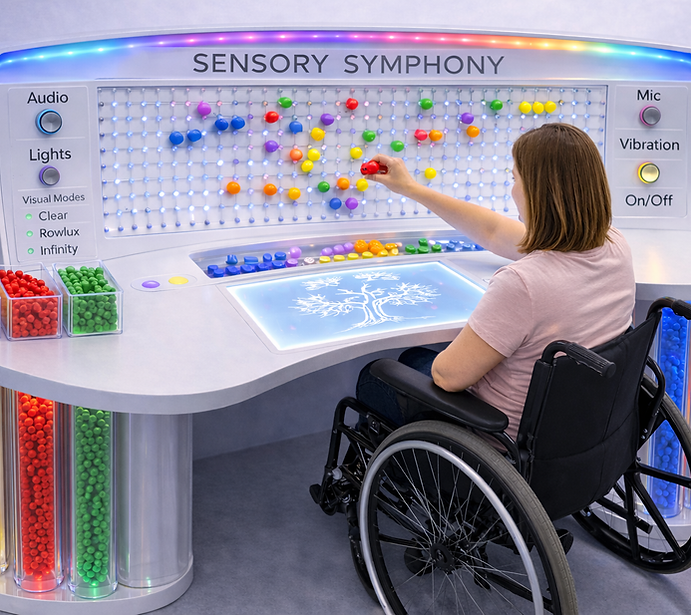
SSDC is a therapeutic environment built for adults with sensory and developmental differences. It brings together light, touch, sound, and motion into a single, responsive system that supports regulation, engagement, and meaningful connection.
Every interaction produces a clear, predictable response—no win/lose outcomes, no performance pressure—just a safe space to explore, express, and participate.
About SSDC
SSDC is a multisensory therapeutic system
for adults with sensory and developmental differences.
Its antimicrobial peg system blends light, touch, sound, and motion into predictable, pressure‑free interaction.
Key Components
-
Light Grid: illuminated peg board with real‑time responses

Infinity & Rowlux surfaces: depth and gentle motion without overstimulation
These elements support attention, visual tracking, and sensory regulation in an adult‑appropriate way.
Built for Real‑World Care
Designed for clinics, day programs, residential homes, and private households where tools must be durable, hygienic, and clinically meaningful.
Optional Features
-
Tele‑Assessment & Remote Support
-
Snap‑On Game Panels
-
Downloadable Templates for structured activities

Tactile Features
Each peg includes layered tactile elements that support recognition, motor planning, and communication.
-
Antimicrobial acrylic body
-
Distinct tactile wrap for grip and sensory input
-
Integrated ASL handshapes
-
Braille dots for tactile literacy
-
Raised color embossments
These features allow users to identify pegs through touch alone, supporting accessibility across a wide range of abilities.
Visual Illumination
The translucent acrylic design allows the SSDC Light Grid to illuminate each pegs from within.
-
Soft, adult‑appropriate glow
-
Clear color visibility
-
Supports visual tracking and attention
-
Avoids overstimulation or childish aesthetics
This creates a calm, immersive visual experience that remains consistent across environments.
Hygienic Construction
The peg system is built for real‑world adult care settings where durability and sanitation matter.
-
Fully sealed construction
-
Antimicrobial surface
-
Resistant to moisture and debris
-
Easy to clean and disinfect
This ensures long‑term reliability in clinics, day programs, residential homes, and private households.
Scent Integration
The SSDC supports gentle scent output that activates during specific peg interaction, adding an additional sensory layer without overwhelming the user.
-
Soft, familiar scents designed for adult sensory profiles
-
Activated only during specific interaction moments
-
Supports grounding, attention, and emotional regulation
-
Optional and adjustable for individual or facility preferences
This scent layer enhances the multisensory experience while maintaining a calm, therapeutic environment.: user/caregiver preferance.
Peg System
Light Grid
The SSDC Light Grid
The Light Grid is the SSDC’s interactive peg board—a multisensory surface that blends light, touch, sound, and motion into a calm, engaging experience for adults with sensory and developmental differences.
What the Light Grid Does
-
Illuminated peg grid that responds instantly to touch and movement
-
Predictable visual, tactile, and audio feedback
-
Calming patterns, playful sequences, and gentle celebratory displays
-
Supports fine motor skills, visual tracking, and purposeful engagement
-
Adjustable intensity and complexity for diverse sensory needs
Consistent, Non‑Competitive Feedback
Every action—placing, moving, or removing a peg—creates a predictable response. This removes performance pressure and encourages confidence, agency, and sustained engagement.
Next‑Generation Innovation
-
Dynamic LED illumination
-
Tactile peg‑based interaction
-
Optional vibration and audio haptics
-
Motion‑responsive modes
-
WiFi‑enabled insights
This unified system elevates traditional sensory tools into a modern, adaptive environment built for adult care settings.
Human‑Centered Design
The Light Grid is designed to honor adult dignity and autonomy. It:
-
Invites exploration without verbal or cognitive demands
-
Supports self‑expression through pattern‑making
-
Fosters shared moments between users and caregivers
-
Reinforces agency: “I do something, and something happens.”
It’s not just for entertainment—but a therapeutic space for safe, meaningful engagement.
Learn & Play!
Let’s Learn & Play!
The SSDC begins in Dormant Mode, resting in a calm, dark state. The grid is off, the light table is off, and the unit is quiet and centered—ready for the user’s touch.
Sensory Wake‑Up
A brief 10‑second programmed light animation brings the Rowlux screen to life. When the first peg is inserted, the SSDC greets the user:
-
Home Use: “Hello, Aaron(i.e). Let’s learn and play.”
-
Facility Use: “Hello. Let’s learn and play.”
The infinity mirror activates, and the Rowlux screen transitions to a bright white surface, preparing the SSDC for either free exploration or a guided activity.
Choose How to Play
Users can begin Free Play, placing pegs anywhere on the grid, or a caregiver or technician can select from Wi‑Fi–enabled templates such as a tree, dog, or other themed design. Templates provide structure while still allowing creativity and sensory engagement.
Sensory Interaction
Each peg insertion delivers a layered sensory response designed to support engagement, learning, and regulation.
-
Tactile feedback from the peg’s wrap, ASL handshape, Braille dots, and color embossments.
-
Haptic vibration confirming each successful placement
-
Audio feedback announcing the peg’s color
-
Periodic light bursts that celebrate progress
-
Encouraging audio cues such as “Great job!” and “Keep going!”
This multisensory loop strengthens fine‑motor skills, visual‑motor integration, communication, and emotional regulation.
Completion Moment
When a template is completed—or when free play naturally comes to an end—the SSDC celebrates the user’s success with a short, 15‑second light show and a spoken confirmation:
-
Home Use: “You did it, Aaron!”
-
Facility Use: “You did it!”
This reinforces achievement without competition or pressure.
Restart Cycle
A Simple Restart Button prepares the SSDC for the next session. Pegs drop into the UV sanitizing chamber, move into a holding area, and the system resets for another round of play, learning, and sensory exploration. For clinical environments, additional details about hygiene and UV support are available in the Clinician section.
Snap-on Game Panels
The SSDC supports optional acrylic snap‑on games panels that expand the system’s interactive possibilities while maintaining the same adult‑appropriate, multisensory design. These add‑ons provide structured, engaging activities that support motor planning, visual tracking, communication, and shared play between adults, caregivers, and clinicians.
4‑in‑a‑Row Panel
The Acrylic Clear 4‑in‑a‑Row panel snaps securely onto the SSDC frame, transforming the Light Grid into a structured, strategy‑free activity that encourages turn‑taking, sequencing, and visual‑motor engagement.
-
Clear acrylic construction for adult‑appropriate aesthetics
-
Large, easy‑to‑reach slots designed for SSDC pegs
-
Predictable, pressure‑free interaction—no competitive scoring
-
Supports bilateral coordination and visual tracking
-
Ideal for shared engagement between user and caregiver
The panel maintains the SSDC’s sensory feedback loop, including illumination, audio cues, and optional haptic responses.
Disc Drop Panel
The Acrylic Clear Ball Roll panel creates a gravity‑based sensory experience that is simple, calming, and visually engaging.
-
Clear acrylic channels for smooth, predictable ball movement
-
Gentle sound profile designed for sensory‑safe environments
-
Encourages cause‑and‑effect understanding
-
Supports attention, anticipation, and regulation
-
Works seamlessly with SSDC’s light and audio feedback
This panel is especially effective for users who benefit from repetitive, rhythmic sensory input.
Designed for Adult Sensory Needs
Both snap‑on panels are engineered with the same principles as the SSDC:
-
durable, hygienic acrylic
-
adult‑appropriate design
-
predictable sensory responses
-
no win/lose outcomes
-
accessible for a wide range of abilities
They offer structured, meaningful activities without introducing pressure or overstimulation.
Snap-on Game Panels
Templates
The SSDC Template Library provides structured, visually clear designs that guide users through object creation, animal builds, scenic layouts, and expressive activities. Templates support adults with sensory and developmental differences by offering predictable steps, gentle visual cues, and multisensory engagement through the Light Screen and Acrylic Peg System.
How The Templates Work
Templates are displayed on the SSDC Light Table Screen using a bright, evenly lit surface that keeps shapes clear and easy to follow. The illuminated outlines offers tactile, visual, audio, and optional scent feedback. This creates a calm, guided experience that supports attention, motor planning, and communication.
Templates are organized into adult‑appropriate categories
that support a wide range of goals and interests.
-
Objects — tools, household items, symbols, and simple geometric builds
-
Animals — familiar shapes such as dog, bird, fish, butterfly
-
Scenes — parks, oceans, cityscapes, seasonal themes
-
Nature — trees, flowers, mountains, weather elements
-
Creative Expression — faces, abstract shapes, “build your own” prompts
Each category includes multiple difficulty levels to support beginners, emerging learners, and advanced users.
Difficulty Levels
Templates are available in three structured levels:
-
Level 1: Simple & Symbolic — large shapes, minimal steps, high clarity
-
Level 2: Familiar & Expressive — moderate detail, recognizable forms
-
Level 3: Symbolic & Sentimental — multi‑step builds, layered meaning
This tiered system allows caregivers and clinicians to match the template to the user’s comfort, skill level, and sensory needs.
Designed for Adult Sensory Needs
All templates are created with adult dignity in mind: clean lines, calm color palettes, non‑childish themes, predictable structure, & accessible visual contrast. This ensures the experience feels respectful, age‑appropriate, and emotionally safe.
For Clinicians
SSDC is designed to work alongside clinical judgment by providing a flexible multisensory platform that adapts to the needs, abilities, and goals of adults with sensory and developmental differences. Its modalities are structured to support regulation, engagement, and purposeful therapeutic interaction in a way that fits naturally into clinical practice. The system uses consistent, non‑competitive feedback—every action produces a response—so participants experience success without win/lose outcomes, supporting confidence, agency, and sustained engagement.
Every element of SSDC is also shaped by a human‑centered philosophy that honors dignity, autonomy, and sensory comfort. The system invites exploration without requiring verbal or cognitive prerequisites, supports self‑expression through movement and pattern‑making, and creates shared moments between participants, caregivers, and clinicians. It is a therapeutic environment—plus entertainment—crafted to offer safe, empowering, and meaningful sensory experiences.
Touch
ALS, Braille, Textured Pegs
Tactile interaction is central to SSDC’s therapeutic value. Pegs feature varied textures, embossed ASL and Braille, and grip‑supportive ridges to encourage purposeful exploration and support fine motor development. The pegs are made from antimicrobial materials to reduce surface contamination, and includes an integrated UV‑C sanitizing system that disinfects pegs between sessions—supporting infection‑control protocols in clinics, day programs, and residential settings.
Therapeutic Applications:
-
Tactile processing
-
Fine motor control
-
Grasp strength
-
Bilateral coordination
-
Sensory modulation
-
Communication support.
Sound
Audio-based Haptics
Adjustable auditory elements complement visual and tactile input without overwhelming the user. Sound‑responsive modes and audio‑based haptics help clinicians shape arousal levels, support multisensory integration, and create predictable sensory feedback loops that promote regulation.
Therapeutic Applications:
-
Auditory processing
-
Attention to task
-
Cognitive sequencing
-
Emotional Regulation
-
Sensory integration and
engagement.
Sight
Interactive light patterns respond to peg placement, movement, and user interaction. Clinicians can adjust brightness, pacing, and visual complexity to match sensory profiles and therapeutic goals. The Light Grid supports both calming and activating visual sequences, allowing clinicians to modulate sensory load with precision.
Therapeutic Applications:
-
Visual tracking
-
Attention to task
-
Cgnitive sequencing
-
Sensory regulation and engagement.
Neuro
Neuro-Assessment Capability
The SSDC has advanced options which includes Wi‑Fi and Bluetooth connectivity, enabling both local and networked interaction. Bluetooth supports quick, on‑site control from a tablet or phone, while Wi‑Fi enables remote updates, downloadable new modes, and optional data insights.
Clinicians can observe interaction patterns, engagement duration, and sensory preferences without interrupting the experience, supporting documentation and interdisciplinary communication.
Therapeutic Applications:
-
Monitoring
-
Attention and regulation
-
Progress and documentation
-
Data-informed treatment planning.
Tele‑Assessment & Remote Support
The SSDC includes an optional tele‑assessment layer designed for professional care settings where remote oversight, documentation, and continuity of care matter. This system extends the SSDC beyond in‑person interaction, allowing clinicians and support teams to observe, guide, and track engagement without interrupting the user’s experience.
Remote Session Monitoring
Clinicians and authorized caregivers can view real‑time interaction data as the user engages with the SSDC. The system captures:
-
Peg placements and interaction patterns
-
Engagement duration
-
Sensory preferences
-
Activity completion
-
Moments of regulation or dysregulation
This creates a clear picture of how the user interacts with sensory input over time.
Template Delivery & Guided Sessions
Templates can be delivered remotely through a secure, Wi‑Fi–enabled interface. A clinician or user can:
-
Select or assign templates
-
Adjust difficulty or structure
-
Introduce themed activities
-
Support communication or motor goals.
This allows guided sessions to occur even when the clinician is not physically present.
Respectful, Non‑Intrusive Design
The tele‑assessment layer is built to honor the user’s autonomy. It observes without overwhelming, guides without interrupting, and documents without creating pressure or performance expectations. The user remains in control of their sensory experience at all times.
Caregiver Communication
The tele‑assessment system supports secure communication between clinicians and caregivers. This ensures that:
-
Recommendations are shared consistently
-
Activity plans can be coordinated
-
Observations can be reviewed together
-
Care teams stay aligned
This strengthens continuity of care across home, clinic, and community environments.
Designed for Real‑World Adult Care
This remote support system is ideal for:
-
Clinics
-
Day programs
-
Residential homes
-
Telehealth‑supported care teams
-
Private households working with remote clinicians
It ensures that adults with sensory and developmental differences receive consistent, coordinated support across environments.
Tele-Accessment
Hygiene & UV Support
The SSDC incorporates a hygiene‑support system designed for adult care environments where equipment is shared, handled frequently, and expected to withstand daily use. The system combines sealed, non‑porous materials with an optional UV‑C cleaning chamber to support infection‑control routines without replacing standard disinfection procedures. This ensures the SSDC fits naturally into clinical workflows while maintaining user safety and dignity.
Cleanable, Durable Materials
All primary components are engineered for fast, reliable cleaning between users. The system uses:
-
sealed acrylic surfaces that resist moisture and debris
-
antimicrobial peg bodies designed for repeated handling
-
tactile wraps selected for wipe‑down disinfection
-
smooth, non‑porous construction that prevents absorption
-
durable materials that withstand daily clinical use
These features help reduce contamination risk and simplify routine cleaning for staff.
UV‑C Peg Cleaning
The SSDC includes an integrated UV‑C chamber that provides automated hygiene support for the Acrylic Peg System.
-
timed UV‑C cleaning cycle
-
enclosed chamber with safety interlocks
-
gravity‑fed or guided peg placement depending on model
-
supports disinfection between sessions
-
reduces manual cleaning burden in high‑use environments
The UV‑C system is designed to support infection‑control practices, not replace standard cleaning protocols.
Workflow Integration for Clinical Settings
The hygiene system is built to fit seamlessly into the routines of:
-
day programs
-
outpatient clinics
-
residential homes
-
community‑based adult programs
-
multi‑user therapy environments
By automating part of the cleaning process and using materials that disinfect quickly, the SSDC helps staff maintain consistent hygiene standards while focusing more time on direct support and engagement.
UV- Cleaning System

Who We Serve
Discover how we support individuals with sensory and developmental differences through engaging multisensory experiences. It is designed for individuals who communicate non‑verbally, who are sensitive to overstimulation, or who thrive when every action produces a clear, supportive response.

Braille Enhanced Pegs
-
Adults with intellectual and developmental disabilities
-
Autistic adults
-
Adults with sensory processing differences
-
Individuals with communication or cognitive challenges
-
Adults who experience anxiety or dysregulation related to sensory overload.

ASL Enhnaced Pegs
-
Clinics and therapy programs for regulation and engagement
-
Day programs and community centers for sensory breaks and shared activities
-
Residential and long‑term care for calming routines and meaningful interaction
-
Homes and family caregiving for daily regulation and connection
-
Adult education and vocational programs for attention and sequencing
-
Behavioral support settings for grounding and de‑escalation.

5 Sense Integrations
-
SSDC provides a dignified, adult‑appropriate sensory experience across all these environments,
-
Offering consistent, non‑competitive feedback
-
Supports confidence, autonomy, and meaningful participation.
About Me & Aaron
My name is Cherris Christensen & This is Aaron


The Sensory Symphony Discovery Center (SSDC) emerged from personal experiences. As the startup founder, I am also the grandmother and caregiver of my profoundly deaf, intellectually challenged, autistic, adult grandson, Aaron. I witness daily, Aaron’s challenges with sensory sensitivities.
Traditional sensory products and therapeutic tools often fall short in providing holistic, learning, entertainment, and sensory sensitive experiences for him. The spark for this innovation has been with me for a while, but during the Covid Pandemic when Aaron’s daycare shut down, the spark ignited into a flame.
I struggled to find products on the market that satisfied Aaron’s sensory needs because most of the products lacked the ability and flexibility to be personalized and integrated into Aaron’s daily life in a manner that adequately addressed his need for sensory feedback.
So, with empathy for Aaron, I was inspired to create a product that would address his boredom and fulfill his lack of sensory inclusion.
My novel solution—The Sensory Symphony Discovery Center—combining LEDs, touch, hand-eye coordination, tactile feedback, vibration, sound and scents, etc. And like Aaron, sensory deprived individuals all over the world can experience intricate and multiple connections to their sensory environments via the SSDC.
The Sensory Symphony Discovery Center extends beyond individuals' diagnoses. Therapy centers and families can integrate the SSDC seamlessly, fostering inclusivity and well-being to challenge adults.
In summary, the Sensory Symphony Discovery Center is not just a product; it's a movement. It embodies the spirit of empathy, exploration, and technological innovation. As we embark on Phase 1, we seek the support to propel this innovation from concept to reality.
Research Studies
Multisensory environments (MSEs) are supported by a strong and growing evidence base across occupational therapy, developmental neuroscience, and disability research. Studies consistently show benefits for neurodivergent adults and individuals with intellectual and developmental disabilities (IDD), particularly when sensory input is predictable, user‑controlled, and therapeutically guided.
Research Evidence